
Hidden Signs of Storm Damage: What Insurance Adjusters Look For vs. What Roofers Spot
November 16, 2026
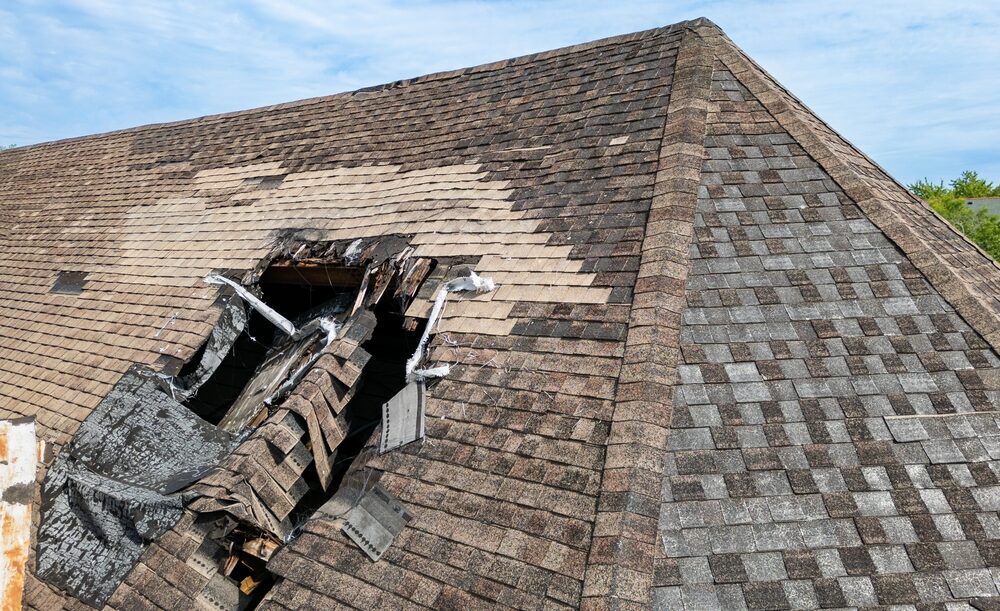
Hail roughly one inch in diameter can bruise an asphalt shingle badly enough to shorten its life by a decade while leaving the surface looking almost untouched from the driveway. That gap between visible damage and actual damage is the reason a professional inspector and an insurance adjuster can walk the same roof and write two different reports. Knowing what each one is trained to see helps homeowners document a claim properly before water finds its way to the ceiling drywall.
Most storm-related leaks do not appear the week of the storm. They appear during the next long rain, or the following winter, after wind-lifted shingles have flexed open a few hundred more times and the sealant strip has given up entirely.
How Hail Bruising Differs From Cosmetic Marks
A hail impact on asphalt shingles does two things: it dislodges granules, and it fractures the fiberglass mat underneath. The granule loss is cosmetic at first. The mat fracture is the real failure, because it opens a path for ultraviolet light and water to reach the asphalt layer.
Roofers check for bruising by pressing a thumb into the dark spot. A fresh hail hit feels soft, almost like a bruised apple, and the mat beneath has a spiderweb crack. Marks left by foot traffic, tree limbs, or manufacturing defects feel firm and usually follow a line rather than a random scatter.
- Random distribution: Genuine hail damage appears scattered across slopes facing the direction the storm traveled, not in neat rows.
- Soft metal evidence: Dents in aluminum gutters, downspout elbows, roof vents, furnace flues, and air conditioner fins confirm the stone size and impact angle.
- Exposed asphalt: A shiny black circle where the granule layer is gone signals that the mat is already taking direct sun.
- Granules in the gutter: A heavy accumulation of sand-like grit after a single storm is a supporting sign, though older roofs shed granules normally.
Hail smaller than three-quarters of an inch rarely fractures a newer shingle mat, but it will strip granules from a roof already 15 years into its service life. The Insurance Institute for Business & Home Safety has published impact testing showing wide performance differences between shingle products at identical stone sizes, which is part of why two neighboring homes can post very different claim outcomes. The team at Kontz Construction often reviews these testing standards when evaluating storm damage to help explain why one shingle fails while another remains intact.
Wind Damage Hides at the Edges, and the Seal Strip
Wind rarely rips a whole field of shingles off a roof. What it does, repeatedly, is break the factory sealant bond along the lower edge of each course so the shingle lies flat again and looks fine from the ground. The tab is no longer attached, and the next 40 mph gust drives rain underneath it.
Gusts in the 45 to 60 mph range are enough to unseal shingles on roofs older than ten years, especially along rakes, ridges, and the first three courses above the eave. Checking for this requires lifting tabs by hand, which is why a ground-level inspection or a drone photo set often misses it entirely.
- Creased tabs: A horizontal fold line across a shingle means it was bent back and laid down again; the fiberglass mat is already cracked along that crease.
- Missing or loose ridge caps: Ridge and hip caps take the highest wind pressure and usually fail first.
- Lifted step flashing: Wind-driven rain exploits any flashing that has pulled away from a sidewall or chimney.
- Nail pops: Fasteners backing out push a small bump through the shingle above and break the seal around them.
Underlayment Problems Nobody Sees From the Driveway
Underlayment is the secondary water barrier between shingles and decking, and it fails quietly. Once wind-driven rain gets past a broken seal strip, the felt or synthetic sheet below it starts taking water it was never meant to hold for long periods.
Signs of underlayment trouble show up inside the house well before they show up outside. Attic inspections are where experienced roofers find the evidence that a quick exterior walk misses entirely, including dark staining on the underside of the deck, rusted nail shanks, and damp insulation batts near the eaves.
In older homes, 15-pound felt that has been wet and dried repeatedly becomes brittle and tears at the fastener holes. Homeowners who schedule roof repair in Pineville, PA after a hail event frequently learn from Kontz Construction that the underlayment, not the shingle surface, is the component driving the repair scope.
What an Adjuster Is Actually Measuring
Insurance adjusters work from a standardized damage assessment method. On most residential claims, that means chalking off a 10-foot by 10-foot test square on each slope and counting qualifying impacts inside it.
Carrier thresholds vary, but many require a minimum number of hail hits per test square, commonly six to eight, before a slope is approved for full replacement rather than spot repair. The adjuster documents stone size, directional damage, soft metal dents, and the age of the roof, then applies depreciation according to the policy language.
- Test squares per slope: Each elevation is scored separately, so a north slope may be approved while the south slope is denied.
- Date of loss: Adjusters cross-reference reported storm dates against the NOAA Storm Events Database to verify hail or wind occurred at that address.
- Pre-existing wear: Blistering, curling, and granule loss from age are excluded, and separating those from storm damage is where most disputes begin.
- Code upgrades: Ice barrier and drip edge requirements may or may not be covered depending on ordinance and law endorsement.
Where the Roofer’s Report Adds Information
A roofing contractor in Bucks County, PA is evaluating whether the assembly will keep water out for the next 15 years, which is a broader question than whether a slope meets a claim threshold. Contractors routinely document interior attic conditions, flashing details, ventilation, and decking moisture that never appear in a standard field adjustment.
Having a contractor present during the adjuster’s visit is legal in Pennsylvania and generally productive, because the two inspections happen at the same time under the same conditions. Our team at Kontz Construction has walked hundreds of these inspections, and the disagreements almost always concern hidden layers rather than obvious holes. For a closer look at policy mechanics, our breakdown of what storm insurance covers explains deductibles, depreciation, and supplement requests in detail.
A Safe Ground-Level Check After a Storm
Climbing a wet or hail-scarred roof is how homeowners get hurt and how additional shingle damage gets created. Everything useful can be documented from the ground and the attic within about 30 minutes.
- Photograph dents in gutters, downspouts, window wraps, grills, mailboxes, and air conditioner fins, with a coin or ruler for scale.
- Walk the perimeter and look along each roof plane at a low angle for lifted edges, missing caps, or dark bare patches.
- Check the flower beds and driveway for shingle fragments and heavy granule washout at downspout outlets.
- Inspect the attic with a flashlight during daylight, looking for pinholes of light, wet sheathing, and stained rafters.
- Look at the siding as well, since the same hail that pits a roof often cracks vinyl panels. Our guide to siding failure warning signs covers what to photograph.
Most Pennsylvania policies require prompt notice of loss, and many carriers apply a one-year window from the date of damage for filing. Documenting the storm date early protects the claim even if repairs happen later.
Frequently Asked Questions:
How Long After a Storm Can Hidden Roof Damage Cause a Leak?
Interior leaks from unsealed shingles commonly appear 6 to 18 months after the storm. Water enters slowly through broken seal strips and nail holes, saturating underlayment and decking before it ever reaches a ceiling, which is why the damage date and the leak date rarely match.
What Size Hail Damages an Asphalt Roof?
Stones one inch in diameter or larger will typically fracture the fiberglass mat on standard three-tab and architectural shingles. Hail between three-quarters and one inch can still strip granules on roofs older than 15 years, and impact-rated Class 4 shingles usually resist damage until stones exceed about 1.75 inches.
Should a Roofer Be Present During the Adjuster Inspection?
Yes, and it costs nothing in most cases. Having a contractor from Kontz Construction on site means hail hits, test squares, and flashing conditions are identified together, which reduces supplement requests later and shortens the gap between approval and repair.
Does Filing a Storm Claim Raise Homeowners Insurance Rates?
Weather-related claims are classified as acts of nature and generally affect rates less than liability or theft claims. Rate increases after a single hail or wind claim are possible but are more often driven by regional loss trends across an entire ZIP code.
How Much Does Storm-Related Roof Repair Cost?
Targeted repairs typically run $450 to $2,200 depending on access, slope, and the number of courses involved, while full replacements on an average 2,000-square-foot home generally fall between $13,000 and $28,000. Covered claims reduce the homeowner’s share to the deductible plus any non-recoverable depreciation.
Schedule a Post-Storm Roof Inspection
Kontz Construction inspects storm damage to help protect your home’s integrity. Contact Kontz Construction to have a licensed roofer document your roof, attic, and gutters before you file, so the claim reflects what is actually wrong up there.