
By the time internal water damage becomes visible, the problem has usually spread far beyond the siding. Repair costs are higher, and the damage can pose serious risks to your home. Catching siding issues early helps prevent these costly and hazardous situations altogether.
Signs Your Siding is Failing: Don’t Wait for Interior Water Damage
December 15, 2025
You may not be aware that your siding is failing because of interior water damage. Behind the surface, mold is growing. Where you cannot see it, structural damage is taking place.
Why Siding Matters More Than You Think
- Primary Defense: Siding is the main barrier protecting your home’s interior and structural elements from water, wind, and extreme temperatures.
- Structural Integrity: Beyond aesthetics, siding shields the framing, insulation, and sheathing; once breached, moisture leads to wood rot and compromised stability.
- Health Hazards: Trapped moisture fosters toxic mold growth behind walls, which can cause serious respiratory issues before it’s even detected.
- Costly Escalation: Minor leaks compound over time, turning simple maintenance into expensive remediation involving structural repairs and mold removal.
- Energy Efficiency: Cracks and gaps allow air to escape, forcing HVAC systems to work harder and driving up monthly utility bills.
- Property Value: Failing siding tank resale value and complicates inspections, while proactive maintenance protects your financial investment.
Red Flag 1: Visible Cracks, Splits, and Breaks
Cracked siding is an obvious warning sign, but it often gets ignored. Homeowners see cracks and think they’re just cosmetic. They’re not. Cracks are openings where water gets in.
Even small cracks allow water penetration. Water doesn’t need a large opening. Capillary action allows water to move through tiny gaps. A hairline crack that seems insignificant is actually a highway for moisture. Water follows that crack into the wall cavity behind the siding.
Cracks expand over time. Temperature cycles cause expansion and contraction. A small crack becomes a larger crack. Movement stress makes cracks worse. Years of weather exposure cause crack propagation. What starts small becomes a major problem.
Vertical cracks are particularly concerning. They often indicate structural settlement. Your foundation is moving. The siding is responding to that movement. Vertical cracks suggest problems potentially more serious than just siding.
Horizontal cracks in wood siding often indicate rot or structural failure underneath. The siding is breaking because the substrate is compromised. This means water has already penetrated and damage is occurring.
Red Flag 2: Warping, Buckling, and Bulging
Siding in Pineville should be flat and tight against your home. When siding warps, buckles, or bulges, it’s failing.
Signs of Siding Failure
- Warping and Buckling: When siding absorbs moisture or lacks room to expand, it curves and pulls away from the wall, creating gaps that invite further water intrusion.
- Visible Bulging: Often a sign of advanced damage, bulges indicate that underlying sheathing or insulation has swollen due to rot, water, or pests.
- Separation and Gaps: Siding should remain flat and tight; if it pulls away from the house or develops gaps at the seams, it is no longer a functional barrier.
- Structural Risks: These issues are not merely cosmetic—they represent a mechanical failure that leads to exponential water damage if not addressed immediately.
Red Flag 3: Missing, Damaged, or Deteriorating Sections
Siding that’s broken, missing, or deteriorating is a clear warning sign. This siding is no longer protective. Your home is exposed. Missing shingles in shingle-style siding are obvious problems. Each missing shingle is an opening. Multiple missing shingles create significant exposure. The sheathing underneath is getting wet. Damage is occurring.
Visual Signs of Material Degradation
- Rot and Soft Spots: Crumbling or discolored sections mean the material has failed; because rot spreads, it usually signals extensive damage to the structure underneath.
- Edge and Corner Wear: Deterioration typically starts at the edges of boards; if the ends are fraying or rotting, moisture is likely already seeping into the interior walls.
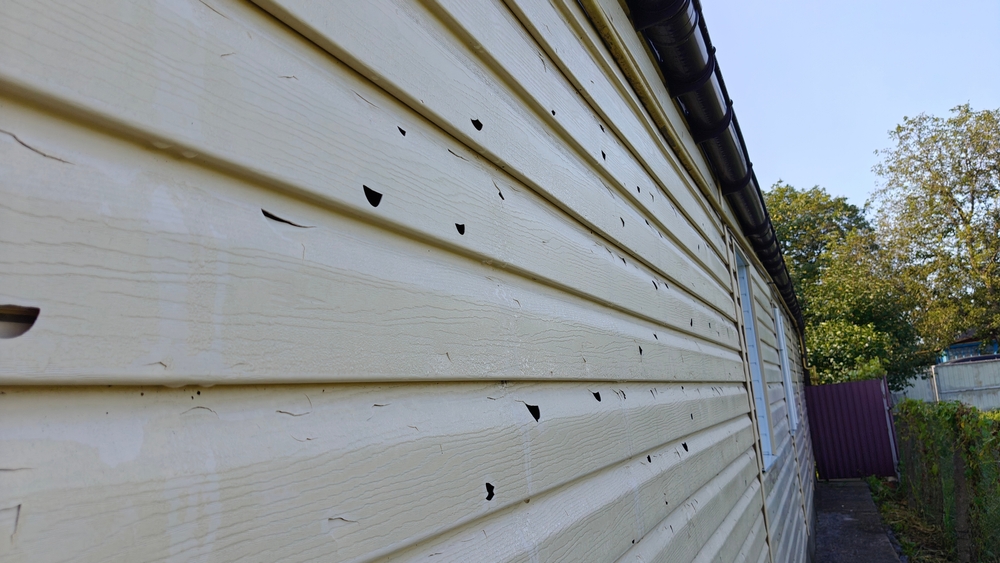
- Dents and Punctures: Impacts from hail or debris aren’t just cosmetic; even small cracks or dents break the protective seal and trap moisture against the house.
- Peeling Paint: On wood siding, peeling is a red flag that moisture is trapped inside the wood, pushing the paint off from the back and indicating a saturated barrier.
- Fading and Discoloration: Significant fading from UV and weather exposure suggests the material is degrading and losing its structural integrity.
Red Flag 4: Water Stains and Discoloration
Your siding’s water stains are an obvious indication that moisture is present where it shouldn’t be. These marks show that your main defense has been violated, regardless of whether they are found on the outside or inside of your house. Water seeping through the siding starts to weaken the materials beneath, which frequently results in concealed damage that needs to be fixed right away.
Several specific types of staining can help you identify the source and severity of the leak:
- Vertical Staining: Streaks running underneath your siding indicate that water is traveling downward behind the barrier rather than shedding off the surface.
- Dark Mold or Mildew: Consistent moisture creates an environment for mold growth. If mold is visible on the exterior, it is highly likely that it has already established itself on the interior of the wall.
- Efflorescence: White, chalky stains suggest water is moving through masonry or other porous materials, leading to inevitable structural degradation.
- Interior Drywall Stains: Marks on your inside walls are an emergency. They signify that siding failure is well-established and water has already penetrated deep into the home’s structure.
- Window and Door Discoloration: Stains around trim and openings indicate that the seals where these components meet the siding have failed and need to be resealed immediately.
- Bubbling Paint: When wood siding absorbs water, the moisture pushes the paint away from the surface, creating bubbles that signal active saturation.
Any sign of water staining means moisture is moving through your home’s exterior. Interior stains, in particular, represent a serious problem that demands an immediate professional assessment and remediation to prevent further extensive damage.
Red Flag 5: Visible Gaps, Separation, and Loose Siding
Siding should be tight and secure. Gaps, separations, and loose sections mean the siding is failing. Gaps between pieces of siding allow water entry. These gaps widen with temperature changes. They’re pathways for wind and water to reach the interior. Any visible gap is a problem.
Separation at corners where different siding sections meet is common but problematic. These joints should be sealed. When they separate, the seal fails. Water exploits the opening. Rusted or corroded fasteners indicate moisture is present. Metal fasteners rust when exposed to moisture. Corrosion compromises the fastener’s ability to hold the siding tight.
Particularly troublesome is siding that separates from the trim around windows and doors. These areas are susceptible to water intrusion. Water readily permeates this area when separation takes place. Once water enters, the wood surrounding windows and doors quickly rots. Siding is failing if there are any holes, separations, or looseness. Water entry is made possible by these issues. Take care of them right away to prevent serious water damage.
Red Flag 6: Interior Signs of Siding Failure
By the time you notice symptoms inside your home, your siding failure is no longer a minor issue; it is a well-established problem. These signs indicate that water has successfully bypassed your exterior defenses and is currently damaging the structural core of your house. Because these symptoms suggest advanced damage to your home’s framing and air quality, you should not delay in contacting a professional for remediation.
Critical Indicators of Structural Breach
- Wall Stains and Soft Spots: Water stains on drywall mean moisture has traveled completely through your walls. If the drywall feels soft or “spongy,” it has reached maximum saturation and lost its structural integrity.
- Visible Mold or Musty Odors: Active mold growth is a serious health hazard. Often, you will smell a damp, musty odor before you see anything; this typically means mold is already established behind the wallpaper or within the wall cavity.
- Peeling Wallpaper or Bubbling Paint: When moisture trapped inside the wall tries to escape, it pushes the interior finish away from the surface, causing it to peel, crack, or bubble.
- Unexplained Humidity: A sudden increase in indoor humidity without an obvious cause often suggests that water is entering through siding failures and evaporating inside your home.
- Insulation Damage: If you can see your insulation and it appears wet, discolored, or compressed, it has lost its thermal effectiveness and is likely harboring mold.
Why Urgency Matters
If you’re noticing signs of damage inside your home, the siding failure has already progressed past a simple “fix-it” project; it’s now a structural issue. These symptoms mean water has breached your home’s exterior defenses and is actively attacking the framing and interior air quality. To prevent further rot or mold, you should address these critical indicators immediately by seeking siding repair in Bucks County.
Critical Signs of a Structural Breach
- Wall Stains and Soft Spots: Water stains on your drywall are a clear sign that moisture has traveled entirely through the wall. If the surface feels “spongy” or soft to the touch, the material is saturated and its structural integrity has been compromised.
- Visible Mold or Musty Odors: Active mold is more than a maintenance issue; it’s a health hazard. If you notice a persistent, earthy smell but see no visible damage, mold is likely already flourishing behind your wallpaper or within the wall cavity.
- Peeling Wallpaper or Bubbling Paint: When moisture gets trapped behind your interior finishes, it tries to evaporate. This pressure pushes paint and wallpaper away from the wall, leading to unsightly bubbling, cracking, or peeling.
- Unexplained Indoor Humidity: If your home suddenly feels muggy or damp without a clear cause, water may be seeping through siding gaps and evaporating into your living space, spiking the humidity levels.
- Damaged or Compressed Insulation: Wet insulation is ineffective insulation. If it appears discolored, matted, or damp, it has lost its ability to regulate temperature and has likely become a breeding ground for mold.
Protecting Your Home and Family
Your siding is your home’s defense against the weather. When it fails, everything inside is vulnerable. Water, mold, and structural damage follow quickly. The red flags described in this post are warnings. They’re telling you that siding failure is occurring. Don’t ignore them. Don’t minimize them. Don’t wait for interior damage to force action.
Inspect your siding today. Look for signs of failure. If you find any, get a professional assessment from Kontz Roofing, Siding & Remodeling. Take action before hidden damage becomes visible damage. Protect your home. Protect your family. Protect your investment.