
Vinyl vs. Fiber Cement Siding: Choosing the Best Exterior Cladding for Durability
November 2, 2026
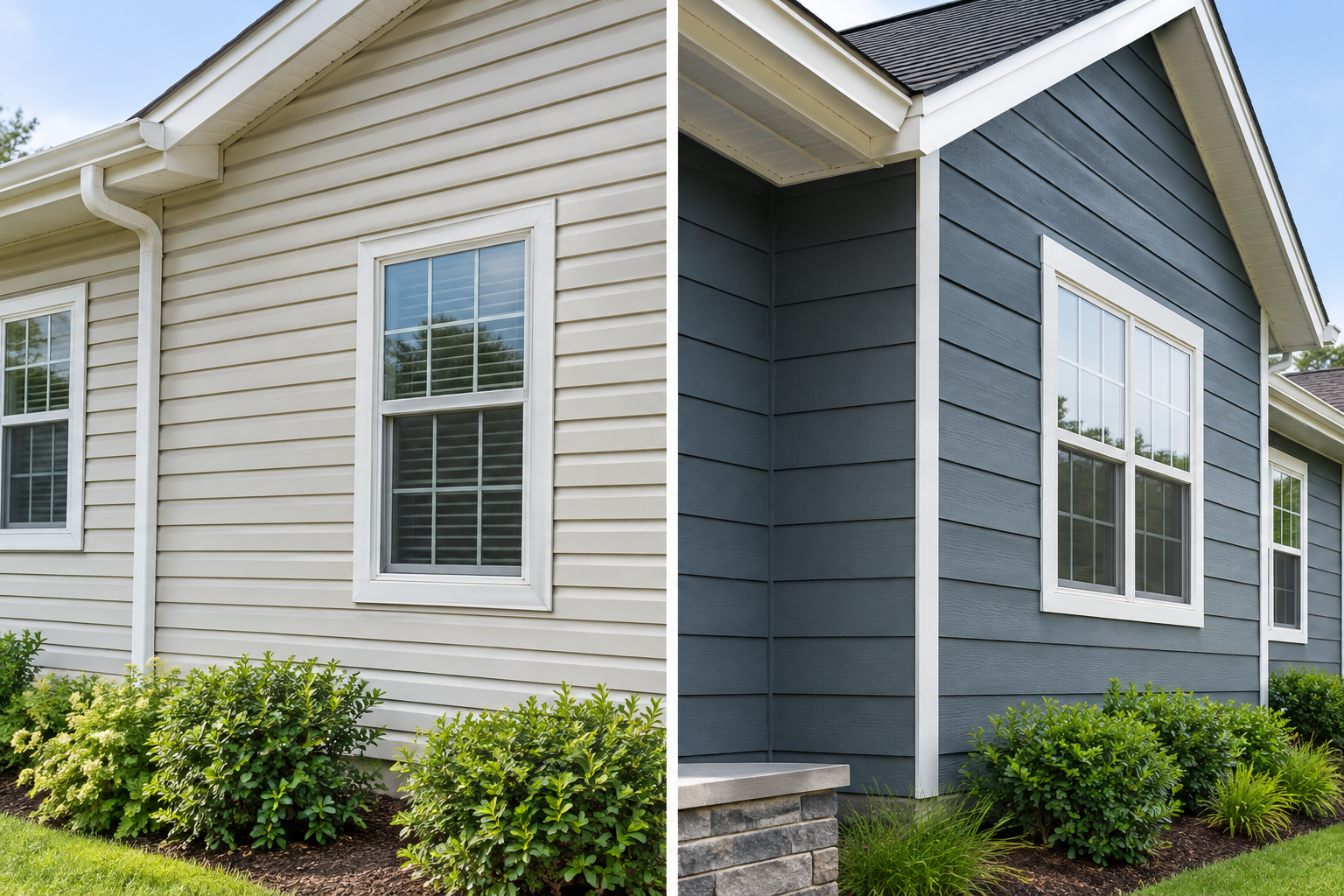
Vinyl and fiber cement siding both last decades on a Pennsylvania home, but they fail in completely different ways: vinyl cracks and warps, while fiber cement holds its shape and eventually needs paint. That difference, more than any brochure claim, should drive your choice. Installed, vinyl typically runs $4 to $9 per square foot in 2026, and fiber cement lands between $9 and $16, so the decision is also a budget decision.
Below is an honest comparison of how the two materials behave over 30 years in a climate that swings from 5°F ice storms to 95°F August afternoons.
What Each Material Is Actually Made Of
Vinyl siding is extruded PVC, usually between 0.040 and 0.046 inches thick on the better panels, with color running all the way through the plank. It hangs loosely on the wall so it can expand and contract, which is why installers leave gaps at the nail slots.
Fiber cement is Portland cement, sand, and cellulose fiber pressed into 5/16-inch boards. James Hardie is the dominant brand, which is why many homeowners simply call the product Hardie board. The planks are rigid, heavy (roughly 2.5 pounds per square foot), and fastened tight to the sheathing.
That single structural difference explains almost everything that follows. One material moves with temperature; the other does not.
Durability in a Mid-Atlantic Climate
Impact resistance is where fiber cement pulls ahead. A thrown baseball, a wind-driven branch, or a ladder foot will crack vinyl on a 20°F morning, since cold PVC gets brittle. Fiber cement shrugs off the same hit, and hail damage claims on it are rare.
Heat is the other weak point for vinyl. Panels begin to distort around 160°F to 165°F surface temperature, which is reachable when sunlight reflects off a low-E window onto a south-facing wall. Fiber cement carries a Class A fire rating and will not melt, burn, or feed a fire from a neighboring structure.
- Wind: premium vinyl is rated to about 110 mph; most fiber cement installations test to 130 mph or higher.
- Moisture: fiber cement absorbs water at cut edges if they are left unprimed, so edge sealing matters more than people expect.
- Insects and rot: neither material feeds termites or rots, a clear advantage over wood and over older hardboard products.
- Expected service life: 20 to 40 years for vinyl, 30 to 50 for fiber cement with repainting.
Fiber Cement Siding vs. Vinyl Cost on a Real House
A 2,000-square-foot two-story home usually has between 1,700 and 2,300 square feet of wall area once you subtract windows and doors. Using 2026 installed pricing in Bucks and Montgomery counties, that works out to roughly $9,000 to $18,000 in vinyl and $18,000 to $34,000 in fiber cement.
Those numbers assume straightforward tear-off of one layer and no sheathing repair. Rotted sheathing, lead-safe work practices on pre-1978 homes, and complicated gable or dormer geometry can add 10 to 25 percent to either figure.
Resale value partially offsets the spend on both materials, as explained in our breakdown of replacement siding ROI. Fiber cement generally recovers a slightly higher share of its cost at sale, though the gap narrows on modest homes where buyers are not expecting premium cladding.
Maintenance Over the Next Three Decades
Vinyl needs an annual rinse and essentially nothing else. When a panel cracks, a repair person unzips the course and swaps the piece, assuming the color is still produced; faded 15-year-old panels rarely match new stock, which is the most common complaint we hear. Our guide to assessing vinyl siding damage walks through when a patch makes sense and when it does not.
Fiber cement requires paint. Factory finishes such as ColorPlus carry 15-year finish warranties, and field-painted board typically needs recoating every 10 to 15 years. Budget $4,000 to $8,000 for a repaint on an average two-story home, and caulking at butt joints and trim should be inspected every few years.
There is also a jobsite safety factor worth knowing about: cutting fiber cement releases respirable crystalline silica, regulated under the OSHA silica standard. Reputable crews use shears or dust-collecting saws, not dry circular blades in the driveway.
Insulated Vinyl and Engineered Wood Sit in the Middle
Standard vinyl offers about R-0.61, essentially nothing. Insulated vinyl siding bonds contoured EPS foam to the back of each panel, raising the assembly to roughly R-2 to R-3.5 while adding rigidity that makes the wall look flatter and sound more solid. Expect to pay $2 to $4 more per square foot than hollow vinyl.
Continuous exterior insulation also reduces thermal bridging through the studs, a point the U.S. Department of Energy covers in its guidance on home insulation. Pairing that upgrade with air sealing is how siding work actually changes comfort, a topic we cover in our article on drafts and hot spots.
Engineered wood siding (LP SmartSide and similar) is the third contender: lighter than fiber cement, more impact resistant than vinyl, priced around $7 to $12 per square foot installed. It still needs paint and it will swell if the bottom edge sits too close to grade.
How to Choose Between the Two
Rather than asking which material is better in the abstract, match the material to the house and to how long you plan to own it.
- Staying 15-plus years in a colonial or farmhouse: fiber cement, for the crisp shadow lines and the ability to change color later.
- Rental, flip, or tight budget: premium insulated vinyl in a mid-tone color, which avoids the fade issues of deep reds and blues.
- Tree-heavy lot or a street with regular hail: fiber cement, since impact repair on vinyl gets expensive after the first few seasons.
- Complex trim details and multiple wall types: consider a hybrid, with fiber cement on the front elevation and vinyl on the sides.
Before you sign anything, read the warranty language on color retention and on labor coverage, which is usually shorter than the material term. Search Google for the contractor’s license number alongside their name, and verify that the siding manufacturer certifies them to install the specific product.
Timing matters too. Siding and roofing are often scheduled together so flashing and drip edge get integrated correctly, and our overview of the roof replacement timeline explains how the two trades sequence on a typical project.
Frequently Asked Questions
What Type of Siding Has the Highest Quality Rating?
Fiber cement consistently earns the highest durability ratings among mainstream cladding, with Class A fire resistance, 130-plus mph wind ratings, and 30-year product warranties. Brick and natural stone outperform it structurally but cost three to five times more installed. Among the budget options, insulated vinyl at 0.046-inch thickness rates well for impact and thermal performance.
What Are the Downsides of Fiber Cement Siding?
The three main drawbacks are cost (roughly double vinyl), weight (about 2.5 pounds per square foot, requiring two installers per plank), and repainting every 10 to 15 years. Cutting it also generates silica dust that demands proper equipment. Moisture can wick into unsealed cut edges, so field cuts should be primed before installation.
Is Hardboard Siding Still Used?
Original pressed hardboard siding has been off the market since the late 1990s after widespread swelling and delamination claims. Modern engineered wood siding replaced it, using resin-treated wood strands with zinc borate for rot and termite resistance. If your home still has 1980s hardboard, check the bottom courses for soft, mushroomed edges.
Get a Side-by-Side Siding Estimate
Joe Kontz installs both vinyl and fiber cement across local counties, including siding installation in Doylestown, PA. Ask for pricing on both materials for your specific house so you can compare the 30-year numbers, not just the install cost.